
Cloud County Criminal Docket Searches
Start at Kansas CaseSearch. Choose District mode for a Cloud County felony or district misdemeanor. The best key is a full case number. Tips call for a four-digit year plus a case-type sequence like 2024-CR-000123. Party searches follow the portal's Last, First pattern. A citation search needs the full ticket number. Set the case-type filter to Criminal and pick Cloud County when the form asks.
Online results are only the first stop. If a public Cloud County criminal docket does not appear, try the courthouse public terminal. Rule 22 requires one. The District Court Clerk's Office, 811 Washington Street, Suite P, Concordia, KS 66901, phone 785-243-8124, can locate an older file and explain copy procedures. Written requests may go through the Kansas court KORA form.
- Open Kansas CaseSearch in District mode.
- Enter the full case number or the portal's party-name format.
- Select Criminal and Cloud County, then complete the human check.
- Confirm the court header, charges, latest events, settings, and result.
- Use the terminal or clerk for an older file, document, or certified copy.
Cloud Criminal Filter Choices
There is no separate criminal-only Cloud County portal. CaseSearch's district form takes a case number, party name, business name, party-as-business name, or citation number. Use the Criminal filter to narrow it. That step matters because the unified clerk holds civil, family, probate, mental-health, juvenile, traffic, and criminal files together, and a common name can return a misleading mix. The right filter keeps results clean.
The live application asks for human verification. If a query fails, check punctuation, the full year, District mode, and the county choice. Then try the public terminal. A result can be old, restricted, filed under another name form, or held by a municipal court. Kansas Courts eFlex serves registered filers, not public docket reading.
Criminal Dockets: What They Show
Read a public Cloud County criminal docket from the header down. The header names the court, number, and type. It adds the filing date, status, and judge. Party roles and attorneys come next. The charge block may list a count, offense, statute, class, or amended allegation. Later rows hold events and settings. Public document links depend on the case, eCourt date, and access rules.
| Case header | Cloud County District Court, case number, type, filed date, status, and judge. |
|---|---|
| Parties | The State or like prosecuting role, accused party, and attorneys where public. |
| Charges | Count, charge text or statute, classification, and amendments when shown. |
| Events index | Complaint, appearance, motions, plea, trial, sentence, review, and closure. |
| Settings | Date, time, label, judge or courtroom, and remote marker when supplied. |
| Disposition | Dismissal, plea, diversion, trial result, sentence, or other closure. |
A blank field does not mean nothing happened. Guest access may expose only part of the record, and an empty document area can reflect a legal limit or an old paper file. For a certified result, get the judgment or order from the clerk.
Cloud Criminal Filings in Context
The FY2025 criminal filing table reports 90 felony and 77 misdemeanor filings in Cloud County. That is 167 total. It also counts 43 pending felony cases, with 9.3 percent pending over twelve months. It counts 25 pending misdemeanors, with 12.0 percent over twelve months. These are fiscal-year counts. They measure neither unique people nor any result in a single docket.
The disposition table lists 111 felony and 105 misdemeanor dispositions. Totals can top new filings. A period often closes cases opened before it. These reports show workload, while one case's course shows in its docket and filed orders.
Criminal Case Stages on the Docket
A complaint opens a Cloud County criminal docket. So can an information or indictment. A first appearance or arraignment takes up the charge and next steps. Bond events may follow when public. From there the event history grows. Pretrial conferences, motions, pleas, trial entries, sentencing, probation review, and post-judgment work fill it. A municipal appeal can create a district record without erasing the city docket.
Docket flow: Filing › Arraignment › Pretrial › Plea or Trial › Disposition › Sentencing
Read dates in order. A charge is not a judgment. A plea may come before the sentence. Dismissal of one count may not close all counts, so track each count and later order on the Cloud County criminal docket. Weigh any future setting against newer reset, continuance, or order entries.
Cloud Criminal Disposition Rows
Kansas reports separate deferred adjudication or diversion, dismissal, guilty plea, jury trial, court trial, and other results. Cloud County's FY2025 felony row reports 29 dismissals, 78 guilty pleas, three other results, one court trial, and no jury trials or deferred entries. The misdemeanor row shows ten deferred results, 61 dismissals, 28 guilty pleas, six other results, and no trial results at all.
- Deferred or diversion
- A route that delays final consequences while conditions are met.
- Dismissal
- An end to a charge or count; read the order for scope.
- Guilty plea
- A procedural event that does not replace the sentencing order.
- Other
- An annual-report bucket, not one defined individual outcome.
No official Cloud code sheet explains shorthand such as DISP or CONT. Read the exact portal label and the linked order. The Cloud County docket search helps locate a case, but a clerk-certified order is stronger proof.
Cloud County Criminal Docket Courts
Felonies, district misdemeanors, and state traffic sit in Cloud County District Court. Criminal appeals from municipal courts sit there too. Its magistrate division is part of the same court. Assigned cases stay with the unified District Court Clerk. There is no separate county or justice court. City ordinance cases and municipal traffic remain with the issuing city.
| Court route | Scope | Access |
|---|---|---|
| Cloud County District Court | Felonies, district misdemeanors, state traffic, appeals | CaseSearch, Suite P, terminal |
| District magistrate division | Matters assigned under Kansas law | Same District Court Clerk |
| Concordia Municipal Court | City ordinance and municipal traffic | 701 Washington Street; 785-243-2670 |
| Other city courts | Each city's ordinance and traffic cases | Issuing city clerk |
A Kansas Bureau of Investigation history report is its own product, not a Cloud County criminal docket. The Central Payment Center likewise covers only payments, not the full index of case events. So check which court issued an entry before you compare names or outcomes.
Cloud Criminal Payment Tools Differ
Eligible traffic, criminal, juvenile-offender, and fish-and-game payments run through the Kansas Courts Central Payment Center. The page describes that payment channel and its covered case types, not the full Cloud County criminal docket.
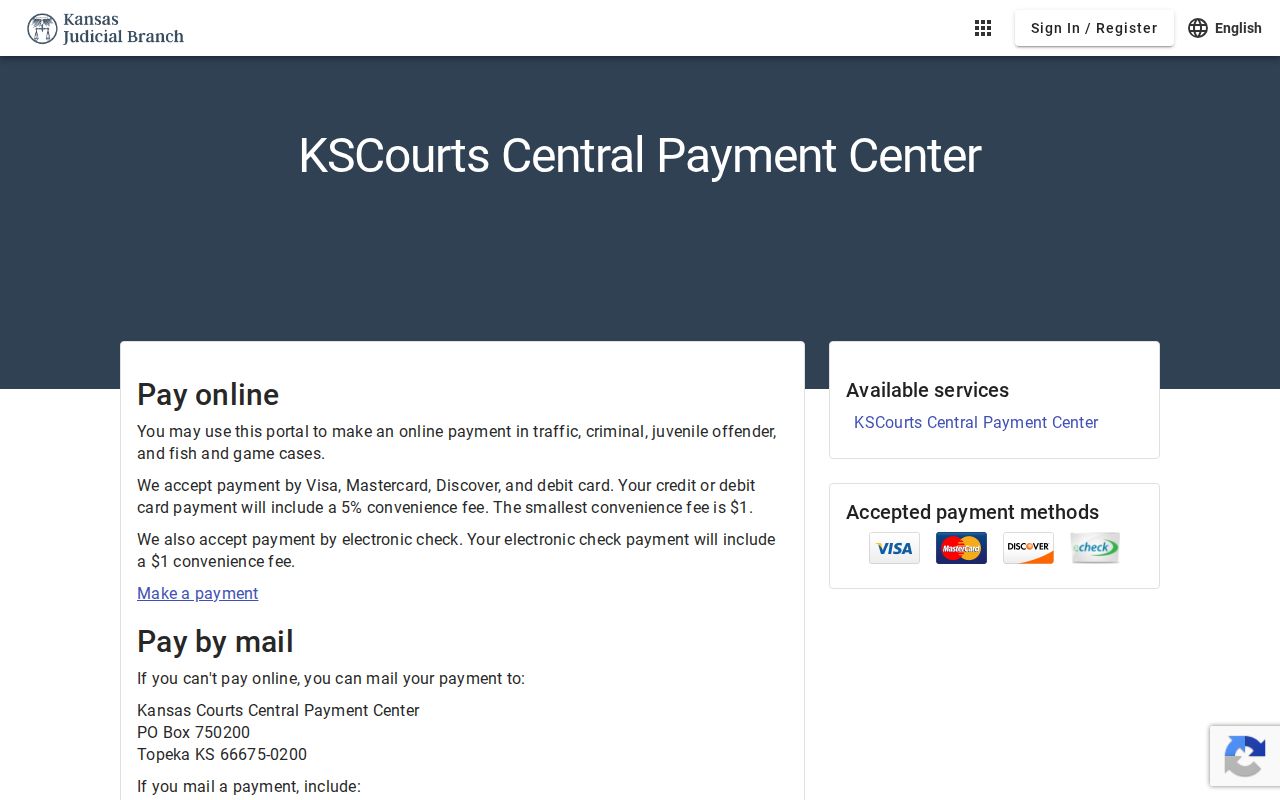
A payment receipt never substitutes for the charge, setting, motion, and disposition entries CaseSearch carries. The Center's own violation and case form is the official page for payment lookups.
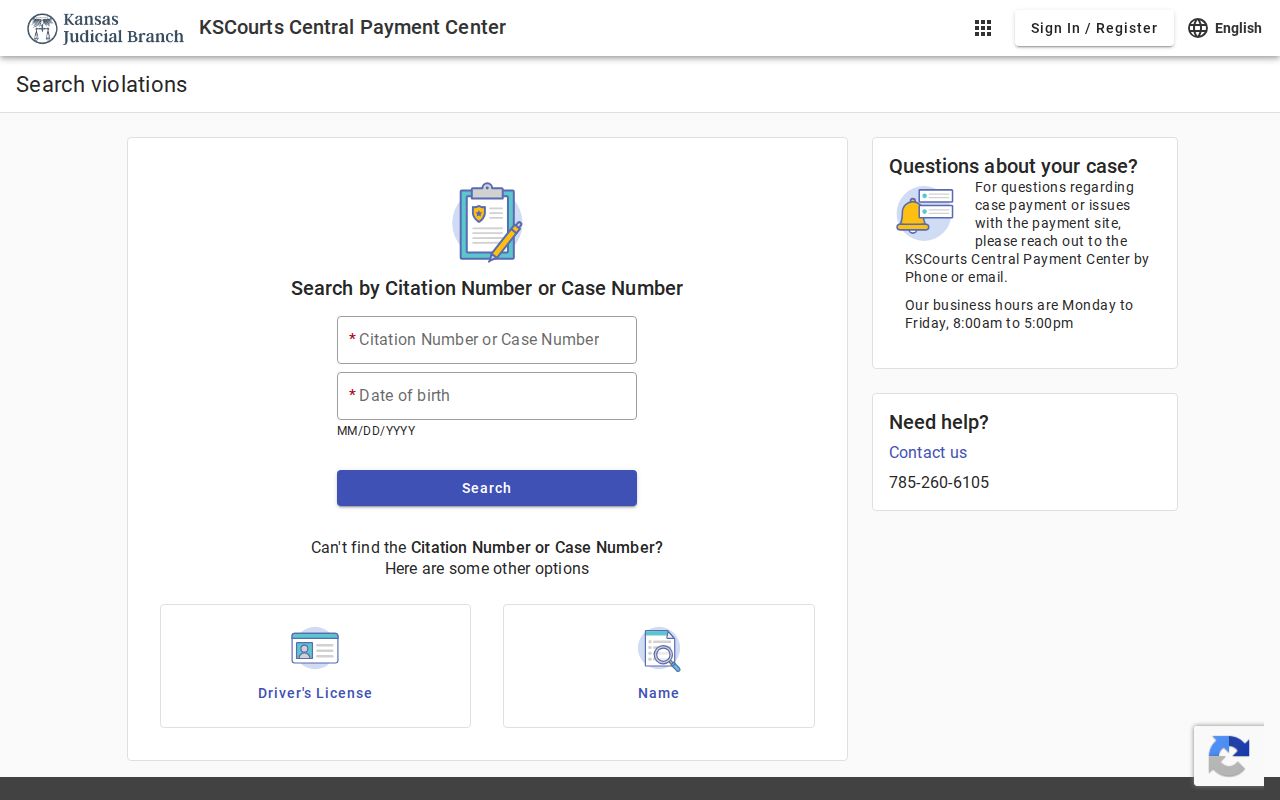
A match there means a payment route may exist, nothing more. It does not certify the record. For official routing, the Judicial Branch fine and fee page states which payments go where.
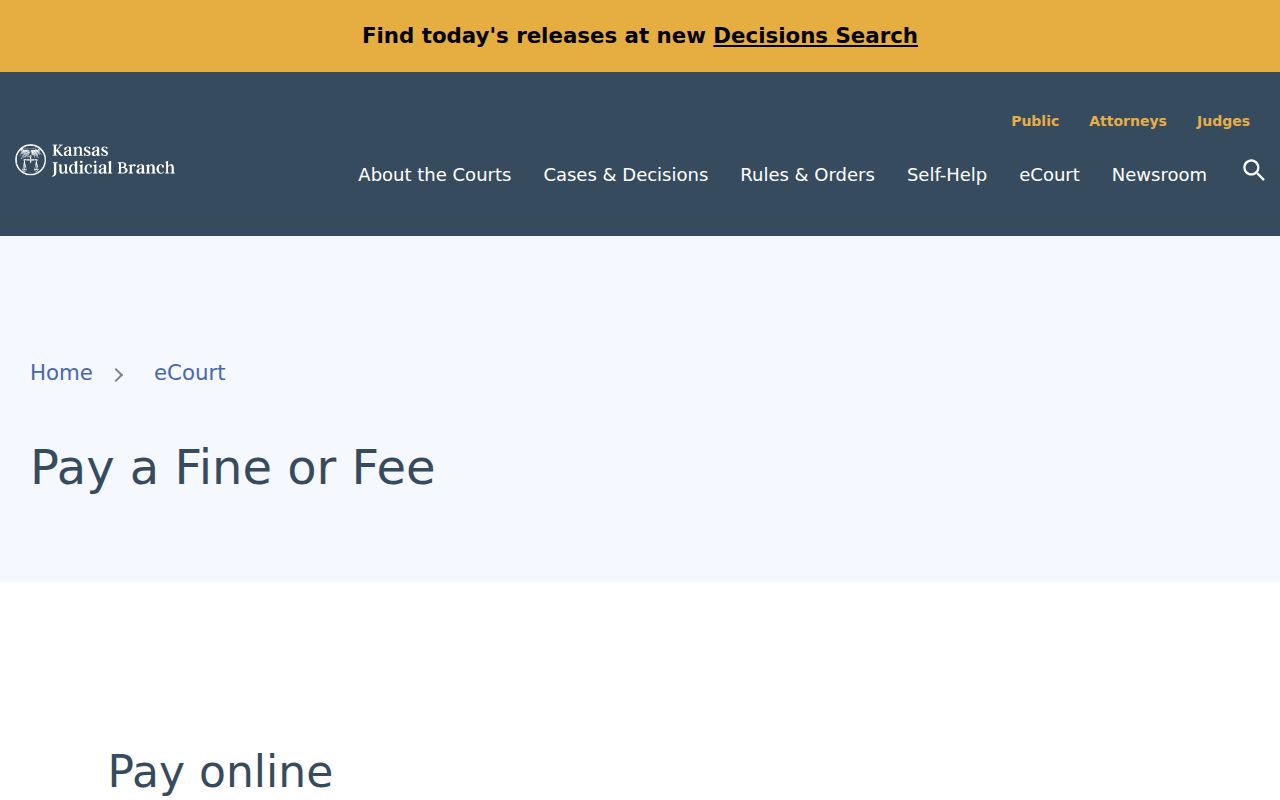
Treat that page as payment guidance only. CaseSearch and the Cloud County clerk remain the docket access points. The Kansas Civil Filings site draws a useful line between record types.
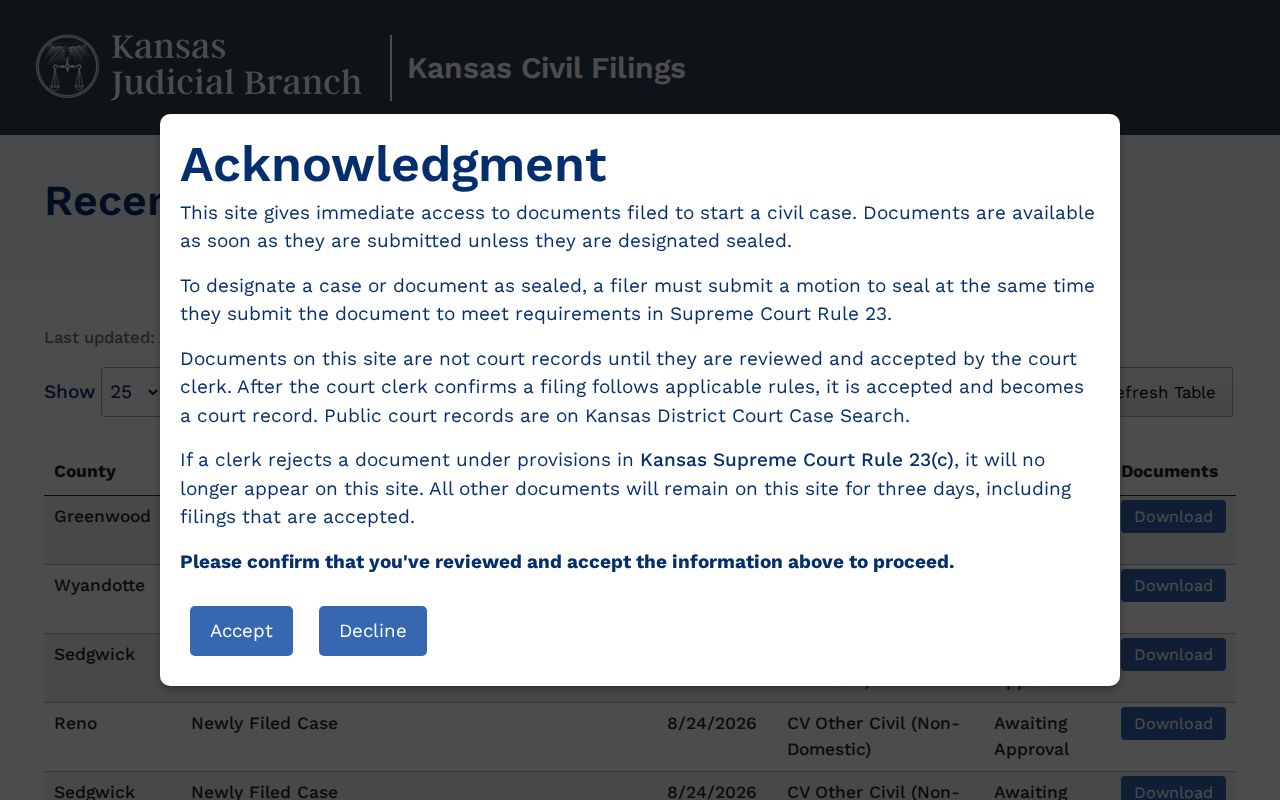
That site covers new civil filings only. A criminal search belongs in CaseSearch's Criminal category.
Older Cloud Criminal Case Files
An older public Cloud County criminal docket may sit at the courthouse even with nothing online. Ask at the Suite P counter for the public terminal. Bring the full case number, the court, and the event or document you want. The clerk posts no public sign-in rule, staff-help policy, or same-day copy promise. Call ahead when time is tight. At the terminal, check that the header names Cloud County District Court. Then copy the full event date and title. Need a filed paper rather than an event entry? Describe that paper to the clerk. This beats a broad name search when a narrow case-number request will do. It also keeps a district file distinct from a city citation or a criminal-history report.
For a complaint, judgment, paper record, or certified copy, ask about the court's KORA form. Confirm the accepted delivery channel. Fax 785-243-8188 is published, though you should confirm by phone that it takes requests. No plain-copy, certification, search, or transcript price is posted for Cloud County, so request an estimate first. A mailed request should state the case number, the document name, and an approximate filing date. Add your preferred delivery method and return contact details. Ask whether prepayment is required. Never mail original case papers.
Note: A courthouse terminal can bridge an online gap. But it cannot open a sealed or nonpublic record.
Access Rules for Criminal Dockets
Access to a Cloud County criminal docket works on two layers. One is a statewide web layer. The other is a courthouse terminal layer. Supreme Court Rule 22 defines both and lists the cases and documents excluded from each. Presentence reports, probable-cause affidavits, trial exhibits, juvenile documents, and unexecuted warrants are restricted portal categories. So a case header can appear while one of its documents does not.
Key access rules:
Rule 22 separates portal and terminal access and identifies restricted material.
Rule 24 requires protected personal information to be redacted.
K.S.A. 45-218 requires prompt request action or an explanation of delay.
Expunged cases, grand-jury matters, and other excluded matters may simply return no public result. Redaction is not sealing. Missing online is not the same as nonpublic. Ask the clerk which authority controls the record. Then ask whether any public parts can still be released to you. K.S.A. 45-218 requires action by the end of the third business day. Otherwise you receive a statement of the reason for delay plus the earliest date available. That deadline does not promise final production within three days. Review can run longer. For an authenticated disposition, the court itself remains the source.